Choosing a data centre cleaning company involves more than comparing quotes. In a mission-critical environment, your cleaning contractor plays an important role in contamination control, equipment reliability and operational risk management.
While price, cleaning frequency and scope of works are important, the real differences between cleaners for data centres often come down to their technical expertise, workforce, equipment and ability to meet your facility's operational requirements.
Whether you're sourcing a new provider or reviewing an existing agreement, here are eight things to consider before signing your next data centre cleaning contract.
1. Do they specialise in data centre cleaning?
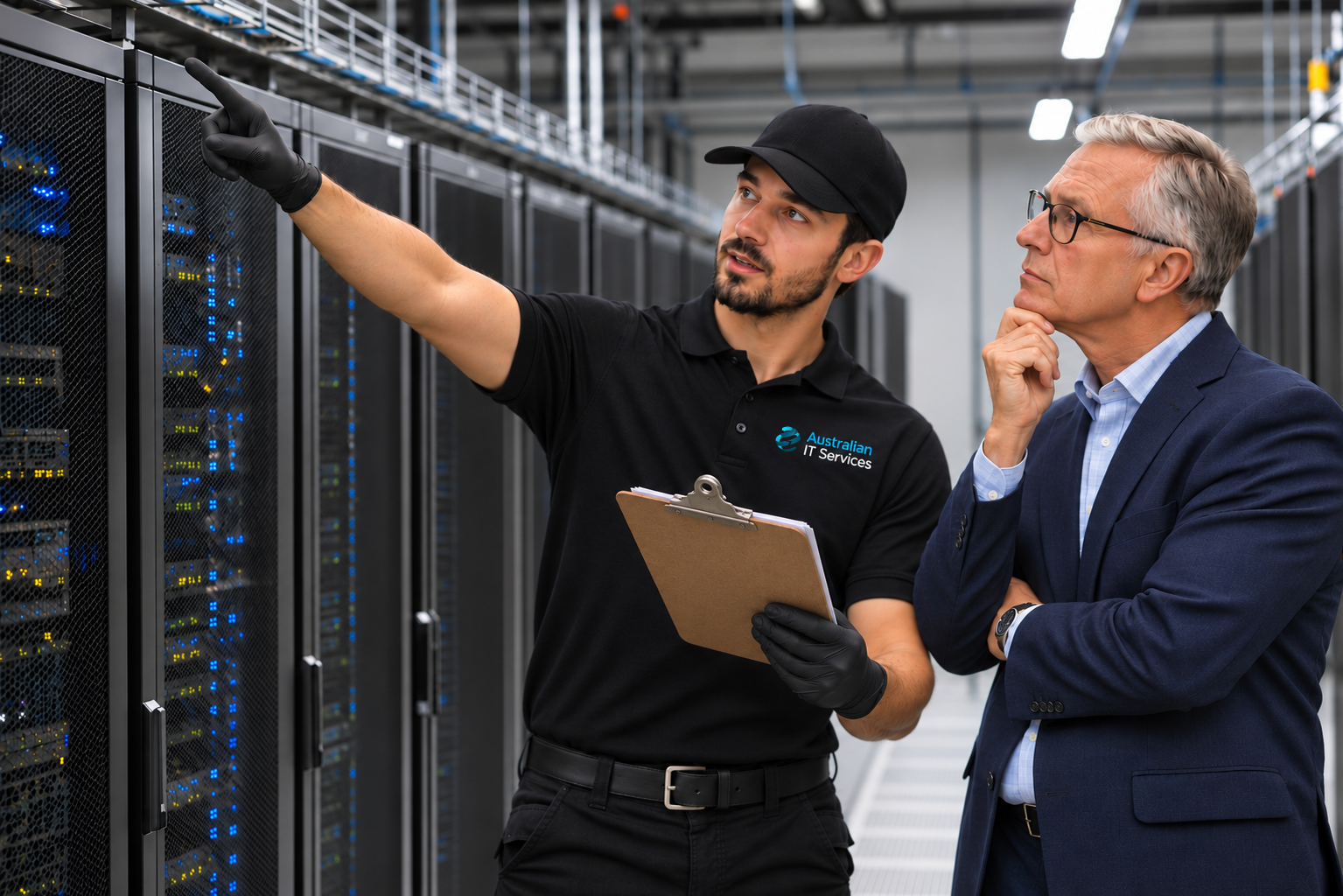
Cleaning data centres is fundamentally different from cleaning commercial offices or industrial facilities.
Data halls, server rooms and comms rooms contain sensitive electronic equipment, complex cable infrastructure and critical cooling systems. Inappropriate cleaning methods can introduce dust, moisture and static-related risks.
When comparing providers, establish whether they genuinely specialise in technical cleaning or simply offer it as an extension of general commercial cleaning.
Ask potential contractors:
How long have they specialised in data centre cleaning?
Do they have experience with live data centre cleaning?
Can they demonstrate experience in contamination control?
Why it matters: A specialist understands the unique requirements of maintaining technical environments, rather than applying general commercial cleaning methods.
2. What cleaning standards and equipment do they use?
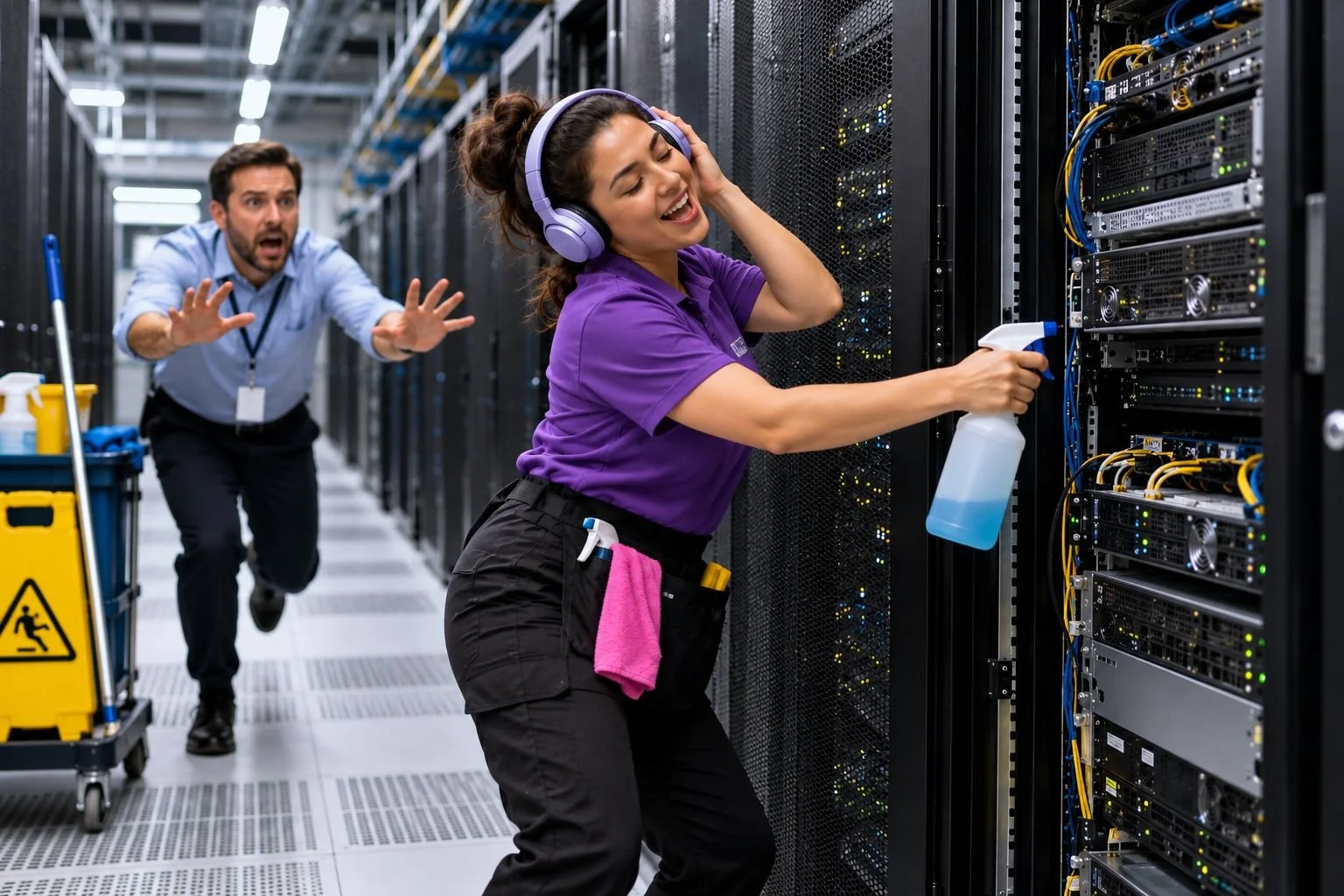
Your contractor should be able to explain the cleaning methodologies, equipment and contamination control measures used throughout your facility.
ISO 14644 is an internationally recognised standard series covering cleanroom classification and airborne particle cleanliness. ISO 14644 Class 8 is a commonly referenced cleanliness benchmark for data centre environments.
Ask contractors how their processes support your facility's required cleanliness outcomes.
Look for:
HEPA-filtered vacuum systems.
Specialist anti-static cleaning agents and consumables.
Appropriate contamination control procedures.
Air-particle count monitoring, where specified.
Documented cleaning methodologies.
Why it matters: Appropriate equipment and processes help control airborne particles and maintain the required cleanliness standards.
3. Who will actually be performing the work?
Will the work be performed by directly employed staff or outsourced to subcontractors?
Establish whether:
Technicians are directly employed by the contractor.
Background checks are conducted.
Supervisors oversee cleaning activities.
The contractor takes direct responsibility for service quality.
Some providers rely on subcontractors to fulfil their agreements, introducing additional layers of management and accountability.
At Australian IT Services, we never use subcontractors. Every Technical Cleaner is directly employed, trained and accountable to our organisation.
Why it matters: Direct employment provides greater control over workforce management, consistency and accountability.
4. Are their technicians properly trained and security-cleared?
Technical cleaning requires specific knowledge of electrostatic discharge (ESD) risks, contamination control and working safely around sensitive equipment.
When evaluating data centre cleaners, investigate their:
Specialist data centre cleaning qualifications.
Contamination control training.
Understanding of ESD risks.
Police checks and relevant security clearances.
Workplace health and safety training.
Personal protective equipment (PPE) requirements.
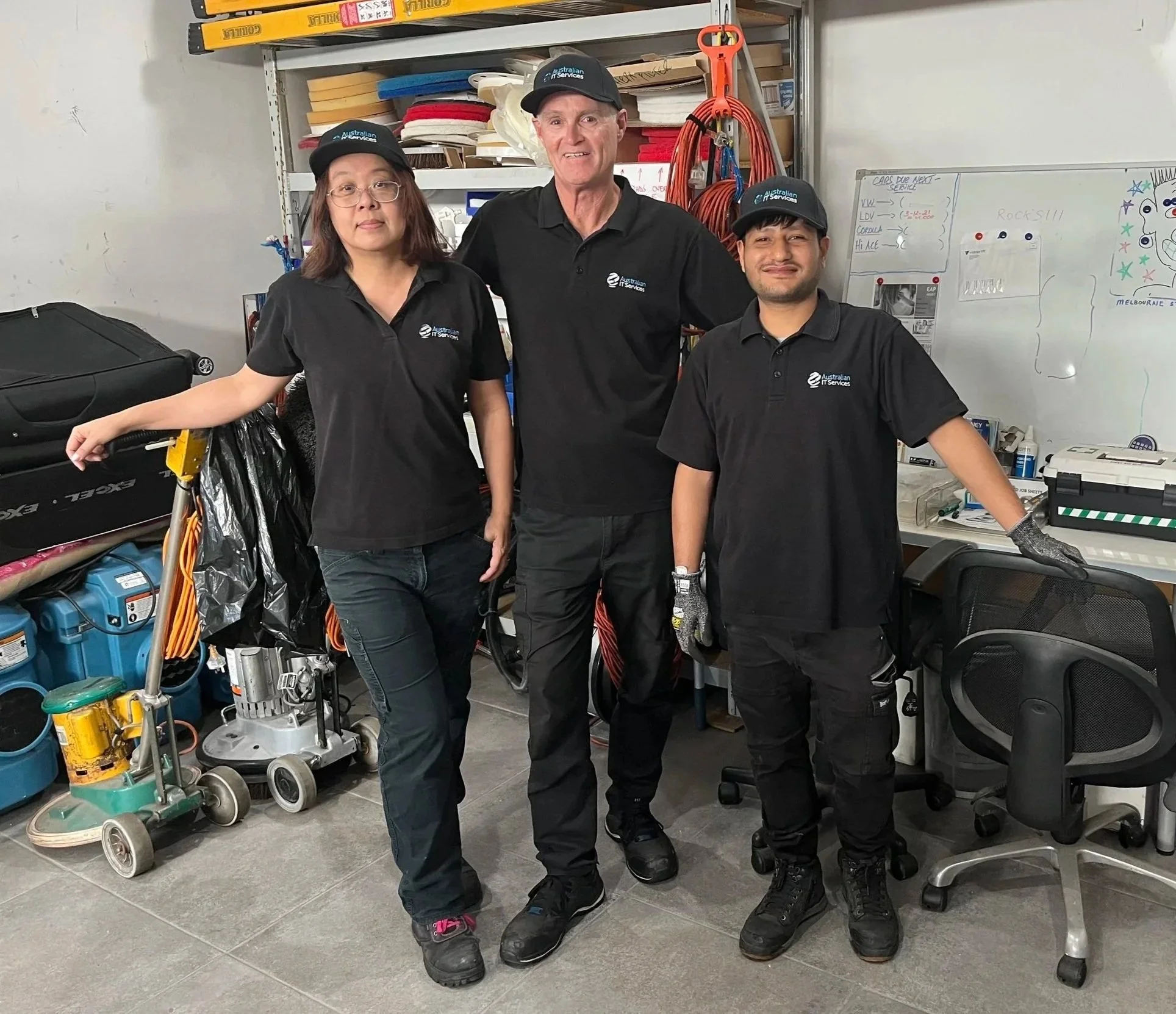
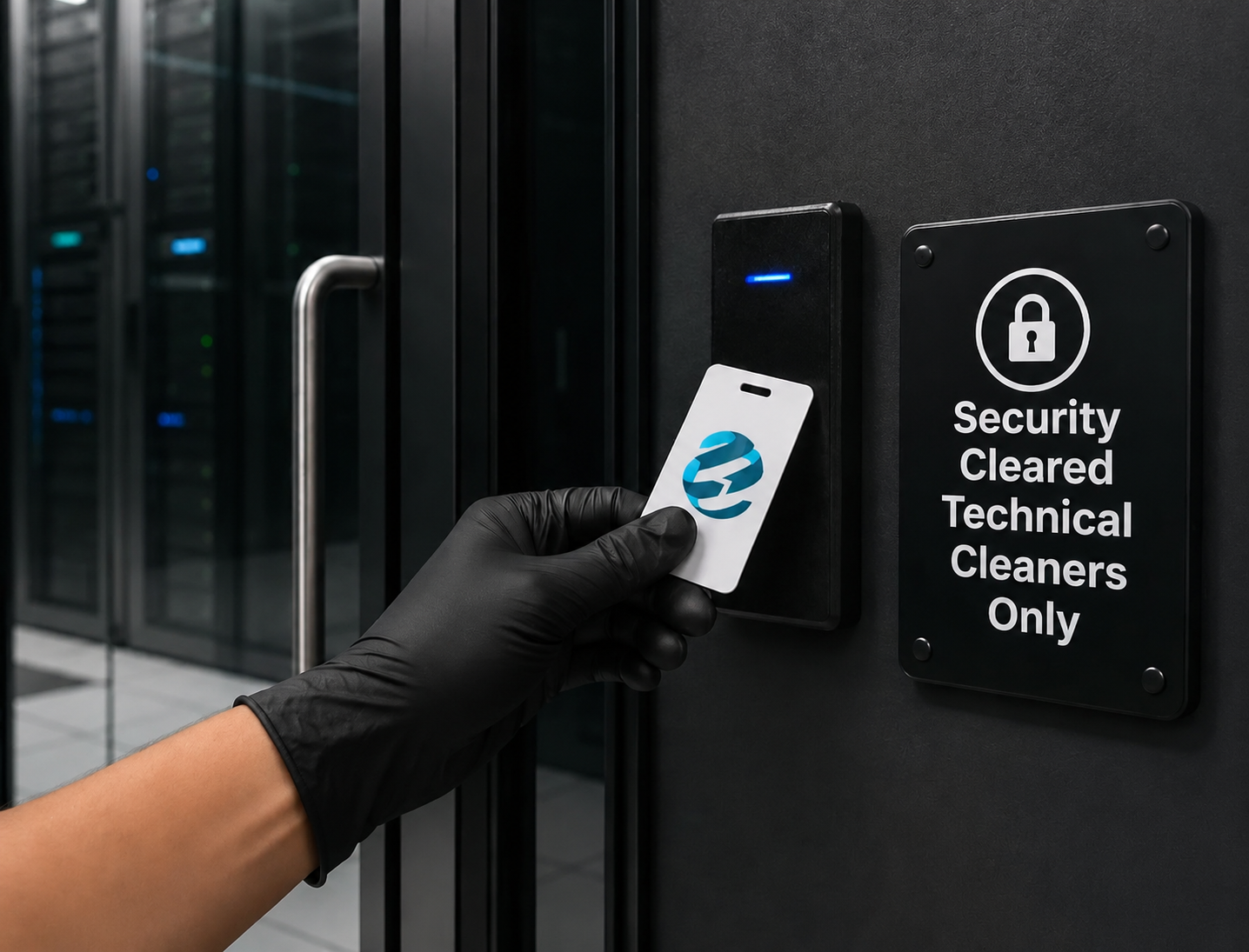
Australian IT Services employs certified, uniformed and security-cleared Technical Cleaners, with specialist training and security clearances up to NV1 classification.
Why it matters: Your contractor's personnel need the appropriate qualifications, security credentials and understanding of the responsibilities involved in accessing critical facilities.
5. Is the scope of works clearly defined?
A common mistake when comparing cleaning contracts is assuming every contractor is quoting on the same scope. A cheaper proposal may simply include fewer cleaning activities.
Ensure all contractors quote on an equivalent scope covering the areas your facility requires.
Depending on your environment, this may include:
Data hall floors and accessible surfaces.
Server rack exteriors.
Raised access floors and underfloor spaces.
Cable trays and pathways.
Ventilation grilles and air-return areas.
Areas above light fittings.
Communications rooms and server rooms.
Technical plant rooms.
Also clarify exclusions, additional charges, consumables and cleaning frequencies.
Why it matters: A detailed scope ensures you're comparing like-for-like proposals and know exactly what you're paying for.
6. Can they accommodate your operational requirements?
Because data centres don't operate on a conventional nine-to-five schedule, your cleaning contractor needs to accommodate facility operations without creating unnecessary disruption.
Consider whether they offer:
After-hours and weekend availability.
Flexible cleaning schedules.
Coordination with facility management teams.
Experience working around live infrastructure.
Familiarity with site-specific access procedures.
Why it matters: Flexible scheduling allows cleaning to be completed around maintenance windows and operational priorities.
7. Do they have appropriate insurance and reporting procedures?
Before signing an agreement, request evidence of the contractor's insurance coverage and workplace health and safety procedures.
This should include:
Public liability insurance.
Workers compensation insurance.
Professional indemnity insurance, where applicable.
Safe Work Method Statements (SWMS), where required.
Risk assessments and incident reporting procedures.
You should also establish what documentation is provided after each service. This may include cleaning checklists, service reports, photographic evidence and air-particle monitoring results, depending on your requirements.
Why it matters: Appropriate insurance and documented service records provide greater transparency and help demonstrate that contractual and safety obligations are being met.
8. Are you comparing value or simply comparing price?
The cheapest data centre cleaning contract isn't necessarily the most cost-effective.
When comparing proposals, consider the overall value being delivered.
What to compare:
Experience: Proven specialist data centre cleaning experience
Compliance: Processes aligned with ISO 14644 (Class 8) requirements
Workforce: Certified, trained and security-cleared technicians
Employment: Directly employed staff rather than subcontractors
Equipment: HEPA filtration and specialist anti-static products
Scope: Clearly defined cleaning activities
Flexibility: After-hours servicing
Insurance: Appropriate and current coverage
Reporting: Documented service records
Pricing: Transparent, competitive rates
If your organisation operates multiple facilities, also consider whether the provider can deliver consistent nationwide servicing.
Why it matters: Look beyond the initial quote and consider the reliability, expertise and accountability you're getting for your investment.
Reviewing your data centre cleaning contract? Make sure you're getting the right value.
Is your data centre cleaning contract coming up for renewal?
Before automatically rolling over another term, it may be worth taking a fresh look at whether you're getting the value, compliance and risk mitigation support your site requires.
Since 1996, Australian IT Services has helped organisations maintain compliant, contamination-controlled data centres, comms rooms, server rooms and other mission-critical environments across Australia.
Our certified, security-cleared Technical Cleaners are extensively trained in contamination control, operational risk mitigation and working safely within critical facilities.
At Australian IT Services, we never use subcontractors. Every cleaner is directly employed, trained and accountable to our organisation, ensuring consistency, quality control and security across every site we service.
Trusted by major organisations including Fujitsu, AWS, Macquarie Data Centres, Westpac, DLA Piper, Woolworths and David Jones, we deliver specialist technical cleaning with competitive rates, flexible after-hours servicing and nationwide coverage.
We're specialists, not generalists. We clean where regular commercial cleaners don't have the security clearance, skills, tools or experience to maintain.
If you'd like a second opinion on your current arrangements, scope of works or cleaning standards, we're always happy to share our perspective.
Sometimes a brief review can uncover opportunities to improve outcomes, reduce risk or simply provide confidence that you're on the right track.