Who Cleans Data Centres in Australia?

Spoiler Alert: There’s No Data Centre Cleaning Fairy
Data centres don't clean themselves.
Despite the critical role they play in supporting modern organisations, there isn't a magical Data Centre Cleaning Fairy that appears after hours to remove dust, contamination, and debris from your facility.
If there were, we'd have one concern: fairy dust.
Because dust is one of the last things you want accumulating around critical IT infrastructure.
Contamination can build up surprisingly quickly within data centres, particularly in facilities experiencing regular foot traffic, maintenance works, equipment upgrades, or nearby construction activity.
Which raises an important question: who actually cleans data centres in Australia?
It's Not Your Regular Commercial Cleaners
One of the biggest misconceptions about data centre cleaning is that it's simply another cleaning task that can be handed to a regular commercial cleaning contractor.
In reality, data centres are highly specialised environments that require specialist cleaning procedures, equipment, and training.
A commercial cleaner may be highly skilled at maintaining offices, kitchens, meeting rooms, and amenities. However, live data centre cleaning is an entirely different discipline.
Data centres contain sensitive electronic equipment, critical network infrastructure, raised floor systems, power distribution equipment, and security-controlled areas that require specialist handling.
Most commercial cleaners are not trained to work around live IT infrastructure. They typically don’t have experience in contamination control, electrostatic discharge (ESD) risk management, or the specialist cleaning methodologies required in mission-critical environments.
Many also do not hold the security clearances often required to access sensitive facilities.
Even well-intentioned cleaning practices can introduce unnecessary risks when performed by personnel without technical cleaning experience.
For example, using inappropriate equipment or cleaning materials can generate static electricity, also known as Electrostatic Discharge (ESD).
An ESD event may be completely invisible to the human eye, yet still have the potential to damage sensitive electronic components and critical infrastructure.
Similarly, conventional cleaning methods can disturb settled dust and contaminants, causing them to become airborne and circulate throughout the environment.
This is why leading organisations don’t rely on general cleaning contractors to maintain their data centres and other mission-critical technical spaces.
So, Who Does Clean Data Centres?
The answer is simple:
Professionally trained Technical Cleaners.
Technical cleaning is a specialised field focused on cleaning and contamination control within critical technology environments.
Unlike general commercial cleaners, Technical Cleaners are specifically trained to work around sensitive infrastructure while minimising operational risk.
They understand:
Data centre environments
Live equipment protocols
Contamination control procedures
Electrostatic Discharge (ESD) management
Raised floor systems
Critical infrastructure protection
Security requirements
Industry cleanliness standards
Zinc whisker identification and remediation
Professional data centre cleaning companies use specialised equipment and antistatic cleaning processes designed specifically for technical environments.
Their objective is not simply to make a facility look clean.
Their objective is to help reduce contamination levels, protect critical infrastructure, support operational reliability, and maintain a safer environment for equipment and personnel.
Why Specialist Data Centre Cleaning Matters
Dust and contamination are more than housekeeping issues in a data centre environment.
Airborne particles can accumulate on equipment, beneath raised floors, within cable pathways, and throughout critical infrastructure spaces.
Over time, contamination can contribute to:
Restricted airflow
Increased maintenance requirements
Poorer environmental conditions
Greater operational risk
While contamination may not cause immediate issues, preventative cleaning helps reduce unnecessary risks and supports the ongoing reliability of critical infrastructure.
For organisations investing millions of dollars into technology assets, maintaining a clean operating environment is simply good practice.
Australian IT Services: Australia's Trusted Data Centre Cleaning Specialists
If you're researching data centre cleaning companies in Australia, Australian IT Services has been helping organisations maintain cleaner, safer, and more reliable technology environments for over 30 years.
We are specialists, not generalists.
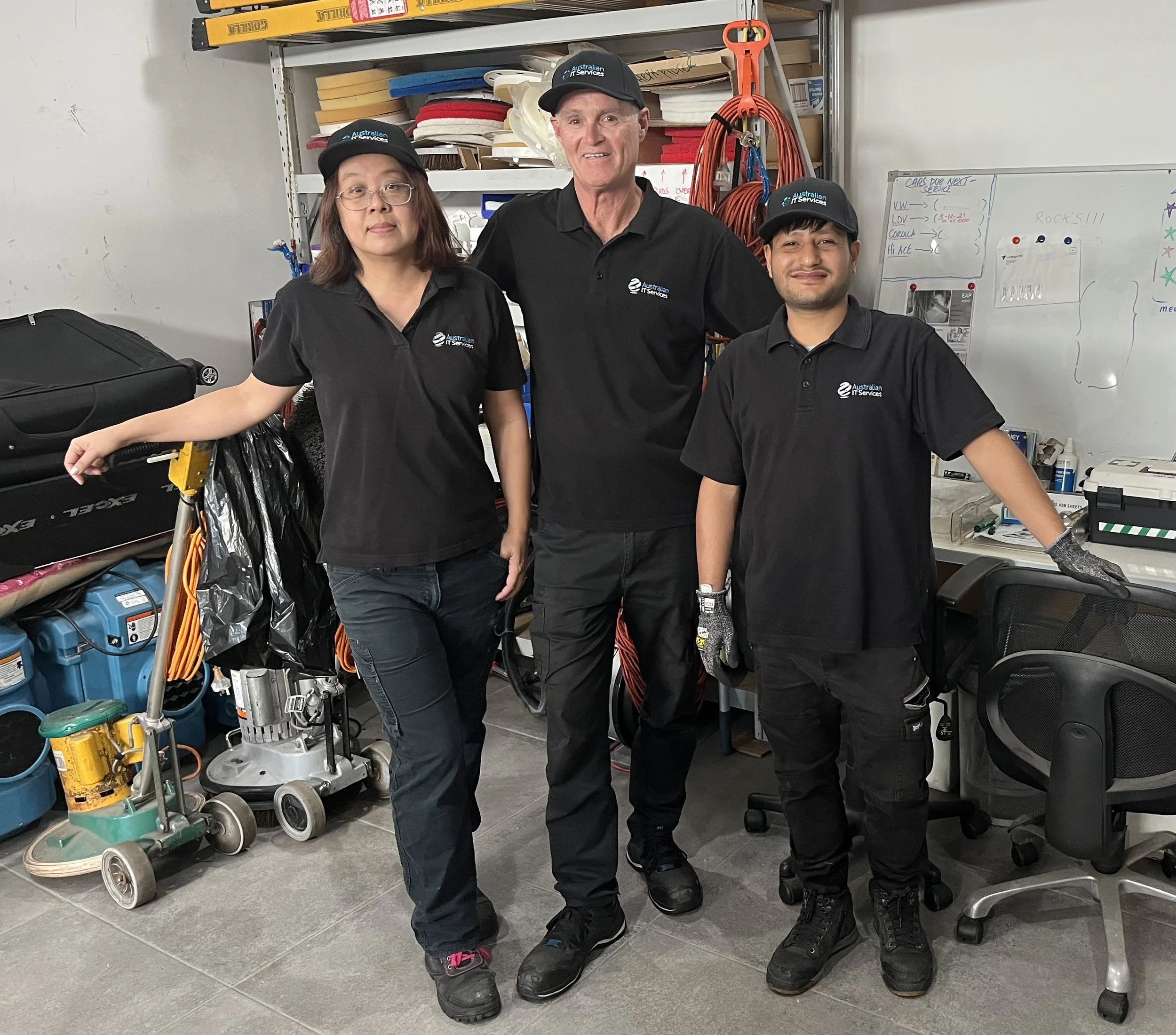
Our certified, uniformed, and security-cleared Technical Cleaners are trained specifically to work within live operational environments where contamination control, security, and risk management are critical.
Unlike many service providers, we do not use subcontractors.
Every Technical Cleaner is directly employed, trained, and managed by Australian IT Services, ensuring complete accountability, consistency, and quality control on every project.
Our specialist services include:
Data Centre Cleaning
Server Room Cleaning
Comms Room Cleaning
Computer Room Cleaning
Post-Construction Final Handover Cleaning
Operating since 1996, Australian IT Services provides nationwide coverage and is trusted by major organisations across Australia to maintain some of their most critical facilities.
Our cleaning methodologies are designed to help organisations maintain cleanliness standards in accordance with ISO 14644 Class 8 guidelines while reducing contamination risks within sensitive environments.
Whether you operate an enterprise data centre, colocation facility, government data centre, telecommunications facility, or corporate server room, our team has the experience, training, and specialist equipment required to perform the work safely and professionally.
Request a Free Site Inspection
If you're looking for a trusted data centre cleaning company that operates in your capital city, Australian IT Services can help.
For three decades, we've helped organisations across Australia maintain cleaner, safer, and more reliable technical environments through specialist data centre cleaning services.
Contact Australian IT Services today to request a free site inspection.
Our team can assess your facility, identify contamination risks, and recommend a tailored cleaning programme designed to support the long-term performance of your critical infrastructure.
Frequently Asked Questions
Who cleans data centres in Australia?
Data centres should be cleaned by professionally trained Technical Cleaners who specialise in contamination control, ESD-safe cleaning procedures, and critical infrastructure environments.
Who are the best data centre cleaners in Australia?
The answer depends on who you ask. We're confident that many of Australian IT Services' long-term clients would consider us among Australia's leading data centre cleaning specialists, thanks to our nationwide service capability, specialist Technical Cleaners, security-cleared personnel, and decades of experience working within critical technology environments. But we'll let you decide.
Can commercial cleaners clean a data centre?
Regular commercial cleaners are generally not trained to work within live data centre environments and may not have the specialist equipment, processes, or security clearances required to safely perform the work.
Why is ESD important when cleaning a data centre?
Electrostatic Discharge (ESD) can damage sensitive electronic equipment. Professional Technical Cleaners use antistatic equipment and cleaning processes designed to minimise ESD-related risks.
How often should a data centre be cleaned?
Cleaning frequency depends on environmental conditions, contamination levels, nearby construction activity, foot traffic, and operational requirements. Many organisations implement regular preventative cleaning programmes to help maintain a clean and reliable environment.